




Sanchi • Raisen • Madhya Pradesh
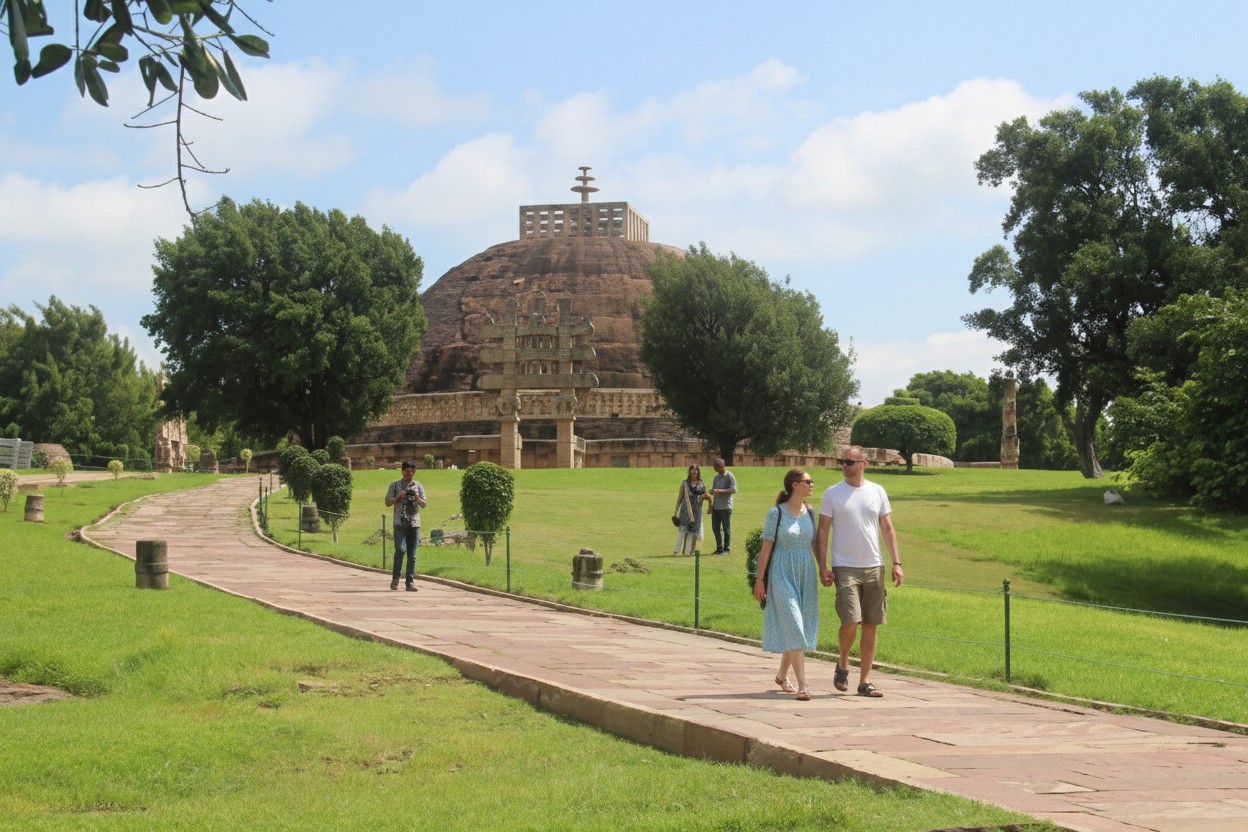
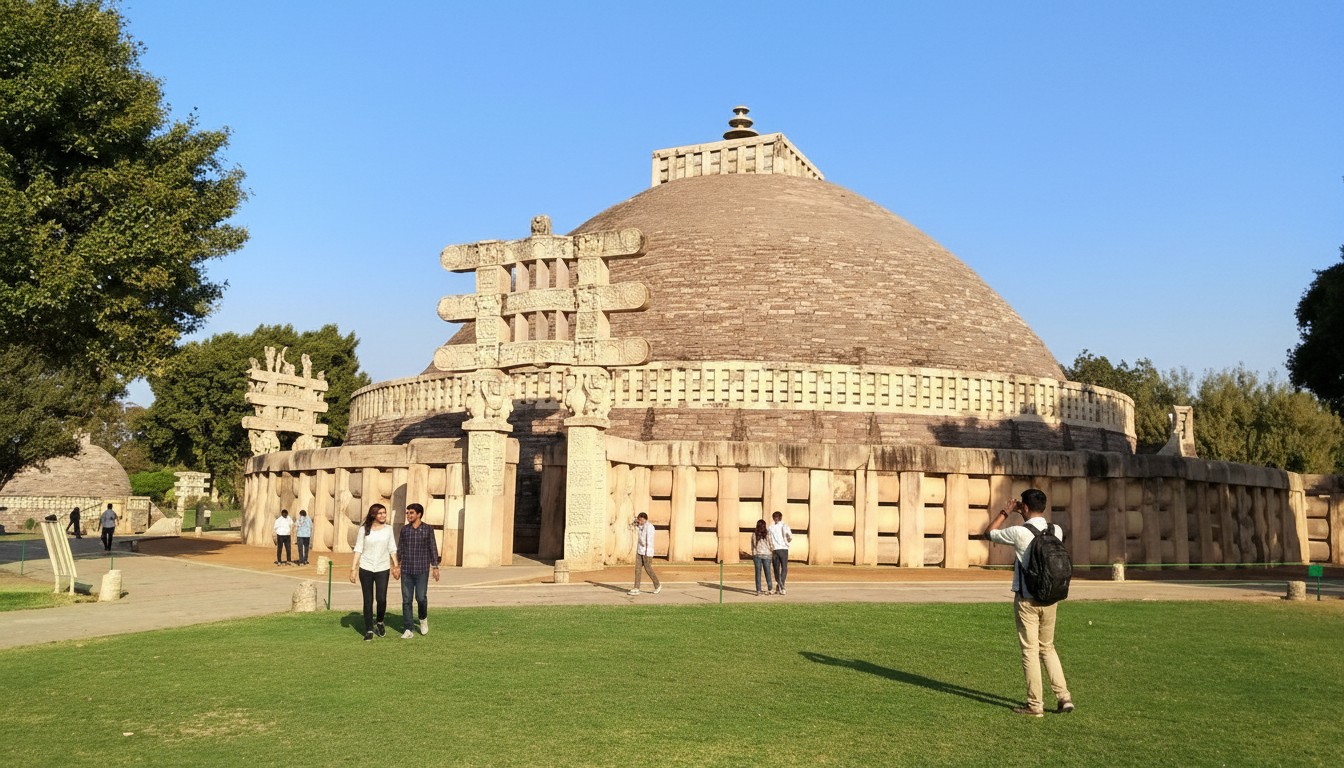
Cultural Heritage SiteThe Sanchi Stupa Complex is a monumental Buddhist heritage site perched on a hill in central India. The focal point is the Great Stupa (Stupa No.1), a massive hemispherical dome covering sacred relics and surrounded by an intricately carved stone railing and four gateways (toranas) facing each direction. These gateways depict stories from the life of the Buddha, Jataka tales, and symbolic Buddhist motifs carved in sandstone.
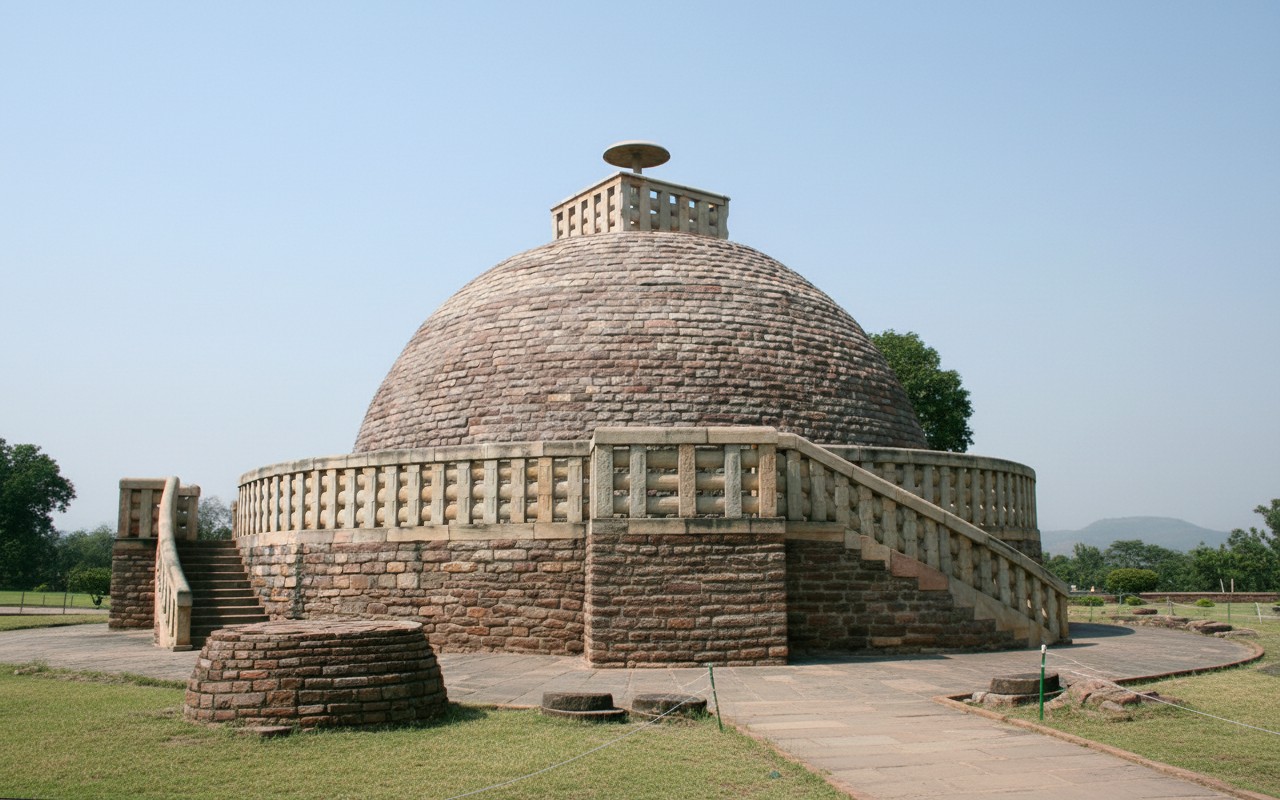
Commissioned by Mauryan emperor Ashoka around the 3rd century BCE, the stupa’s core was a simple hemispherical brick structure. Over centuries (especially under the Shunga and Satavahana dynasties), it was enlarged and embellished with ornate stone work. The complex also includes Stupa No.2 and Stupa No.3, monastic residences, temples, and stone pillars, including one of the famed Ashoka Pillars whose four-lion capital became India’s National Emblem.
Recognized by UNESCO as a World Heritage Site since 1989, Sanchi represents one of the oldest and best-preserved examples of early Buddhist architecture and art, providing deep insight into Buddhist ritual, symbolism, and the spread of Buddhism in ancient India.
What is the best time to visit?
What is the entry fee?
₹ ₹40 per person